
The Cost of Refusing Help
Off CampusThis thread traces Tom Worthington’s belief that accepting assistance would compromise his independence, and how practical care teaches him to distinguish support from exploitation.
increasing Bearing strength in each event
 decreasing
Bearing strength in each eventdecreasingThe Self-Reliance Creed

Survival Without Assistance
A rule built from humiliation
Tom Worthington learns to treat self-sufficiency as more than a practical necessity. After his father’s financial scandal destroys the life Tom expected to inherit, offers of help often arrive with assumptions, pity, or conditions attached. His response is to keep moving and make survival look like a private achievement.
Work as proof of worth
He drives a cab, sleeps in his car, and pieces together tuition money one shift at a time. The work is exhausting, but it offers a measure of control: each dollar comes from his own labor rather than from a favor that might later become leverage.
This creed protects Tom from further humiliation, yet it also narrows the world he permits himself to occupy. By the time he returns to Carlisle College, he has mistaken needing help for a personal failure and has built his daily life around avoiding the admission.
A Refused Exception

Help He Cannot Accept
The tempting route
When Tom investigates financial aid, an administrator explains that his father’s imprisonment could qualify him for a dependency override. The exception might make school affordable, but the route requires Tom to use his father’s crimes as evidence of his own need.
Independence as moral resistance
Tom turns away from the opportunity and pays his way through work instead. He knows the decision is financially dangerous, yet accepting that particular exception feels too much like benefiting from the same scandal that has already shaped how strangers see him.
His choice reveals the difference he is trying to preserve between his father’s conduct and his own. It also shows the trap in his reasoning: Tom protects his moral identity by accepting a hardship that could prevent him from finishing school.
The Loan He Rejects

A Gift That Feels Like Debt
The laptop on the couch
Reese Anders gives Tom his old laptop, carefully insisting that it is a loan rather than a Christmas present. Tom understands the practical kindness, but the gesture still lands on the shame he has tried to conceal: he cannot afford the equipment he needs for school.
The larger offer
Soon the Anders family sees how precarious Tom’s finances are. Reese and Mr. Anders offer a loan, but Tom refuses because he fears taking resources away from Reese’s own education and becoming dependent on his boyfriend’s family.
The refusal is not a lack of gratitude; it is the old creed asserting itself even when care is clearly offered without manipulation. Tom’s struggle makes intimacy difficult, because accepting help would mean trusting that generosity can exist without an unseen price.
Naming the Need
Letting Others Know
An open account of hardship
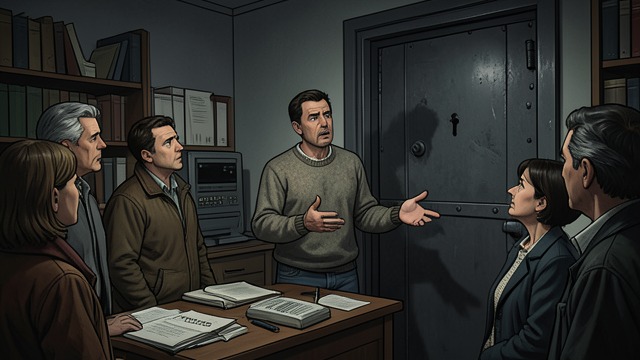
At Reese’s urging, Tom finally explains his circumstances to the dean, department leaders, and professors. He has to describe the gaps between his expenses and income, and to acknowledge that his living situation has been unstable rather than merely unconventional.
Help without a hidden bargain
The disclosures lead to concrete support: a work-study position, resources for books, and a grant that covers tuition for the semester. The support comes through institutional channels and requires Tom to participate in practical follow-up, but it does not demand that he pretend his father’s incarceration has made him morally deserving.
This moment revises Tom’s idea of independence. He has not surrendered responsibility; he has allowed other people to respond to facts he could not solve alone. The assistance makes staying in school possible and gives his hard-won self-reliance a less punishing form.
A Broader Definition

Independence With Other People
From secrecy to planning
With tuition support secured and a path to financial aid ahead, Tom begins making plans that extend beyond simply surviving the next bill. He considers remaining at Carlisle for another year, taking on more teaching work, and pursuing a broader academic course.
Help becomes reciprocal
Tom also understands that letting people stand beside him is not the same as asking them to carry his life. His relationship with Reese, and the support of friends and teachers, has shown him that care can be freely given while responsibility remains shared rather than transferred.
The change is measured rather than complete: Tom still has to work against shame and the impulse to withdraw. But he can now imagine a future in which accepting support is part of making his own choices, not a betrayal of them.
During Tom’s year and a half away from campus
Before Tom returns to campus for the fall semester
On Christmas morning at the Anders home
During January term, after Tom returns from the Anders home
Near the end, as Tom prepares to return for another year
